If a storm has damaged your roof, the first steps are to make sure everyone is safe, document the damage with photos, and get the roof temporarily protected so water stops coming in. After that, call your insurance company and bring in a licensed Florida roofing contractor to inspect the roof before you sign anything with anyone.
Here in Volusia County, summer storms and hurricane season can leave homeowners dealing with missing shingles, lifted flashing, fallen limbs and surprise leaks. Here is how we suggest working through it.
Put Safety First
Before you think about shingles, think about people. Storm damage can create hazards you can't always see from the ground.
- Stay off the roof. Wet surfaces, loose materials and hidden weak spots make it dangerous, even for experienced folks.
- Watch for downed power lines near the house and report them to your utility right away.
- If water is coming through a ceiling near light fixtures or outlets, shut off power to that area at the breaker if you can do so safely.
- Keep kids and pets away from rooms with sagging or stained ceilings, since soaked drywall can give way.
Document Everything With Photos
Good records make the insurance process smoother. Walk around the outside of your home and take clear photos and video from the ground. Capture missing or damaged shingles, debris on the roof, dented gutters, damaged soffits and any fallen trees or limbs.
Inside, photograph water stains, wet insulation, damaged ceilings and any belongings that got soaked. Take wide shots to show location and close ups to show detail. Write down the date of the storm and when you first noticed the damage. Keep receipts for anything you buy to protect the home.
Get Temporary Protection in Place
Stopping further water damage matters, and many insurance policies expect homeowners to take reasonable steps to prevent more damage after a storm. Check your own policy for the details.
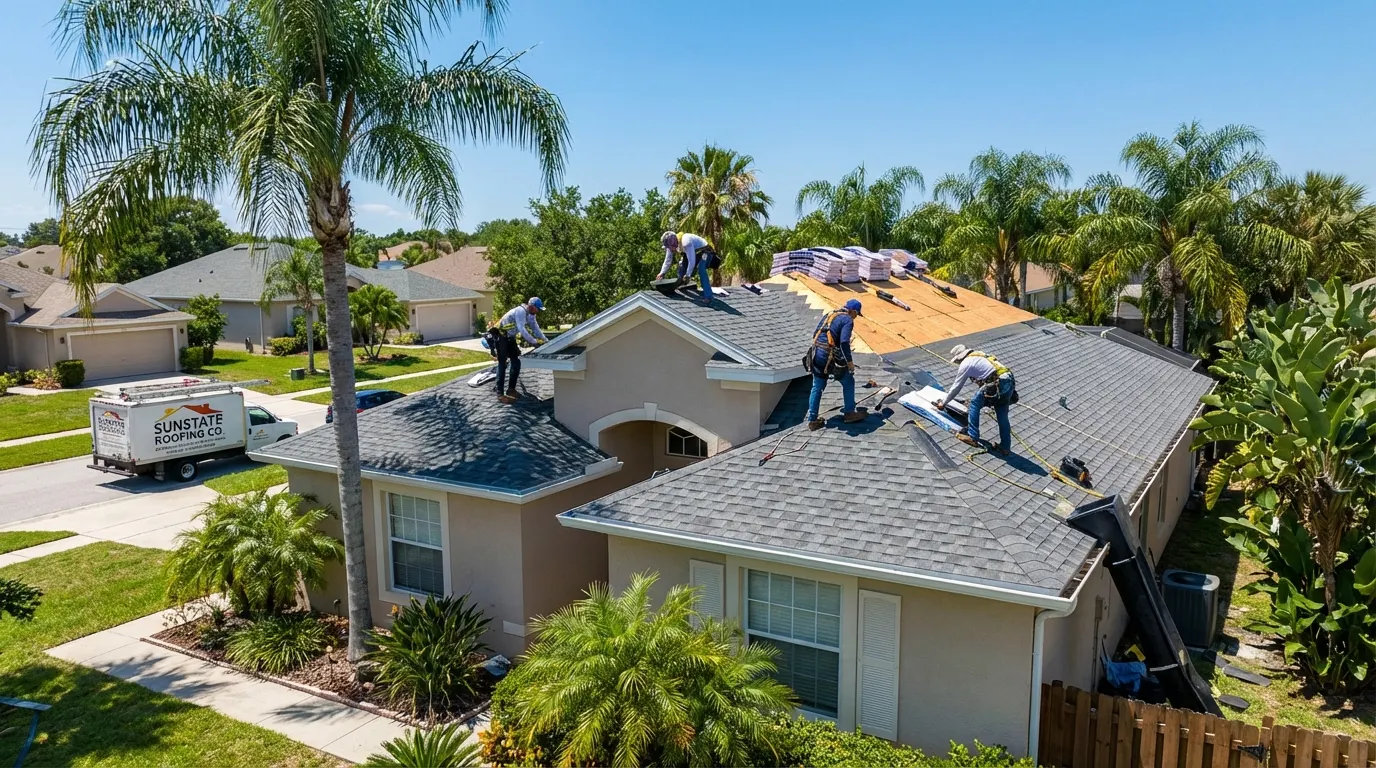
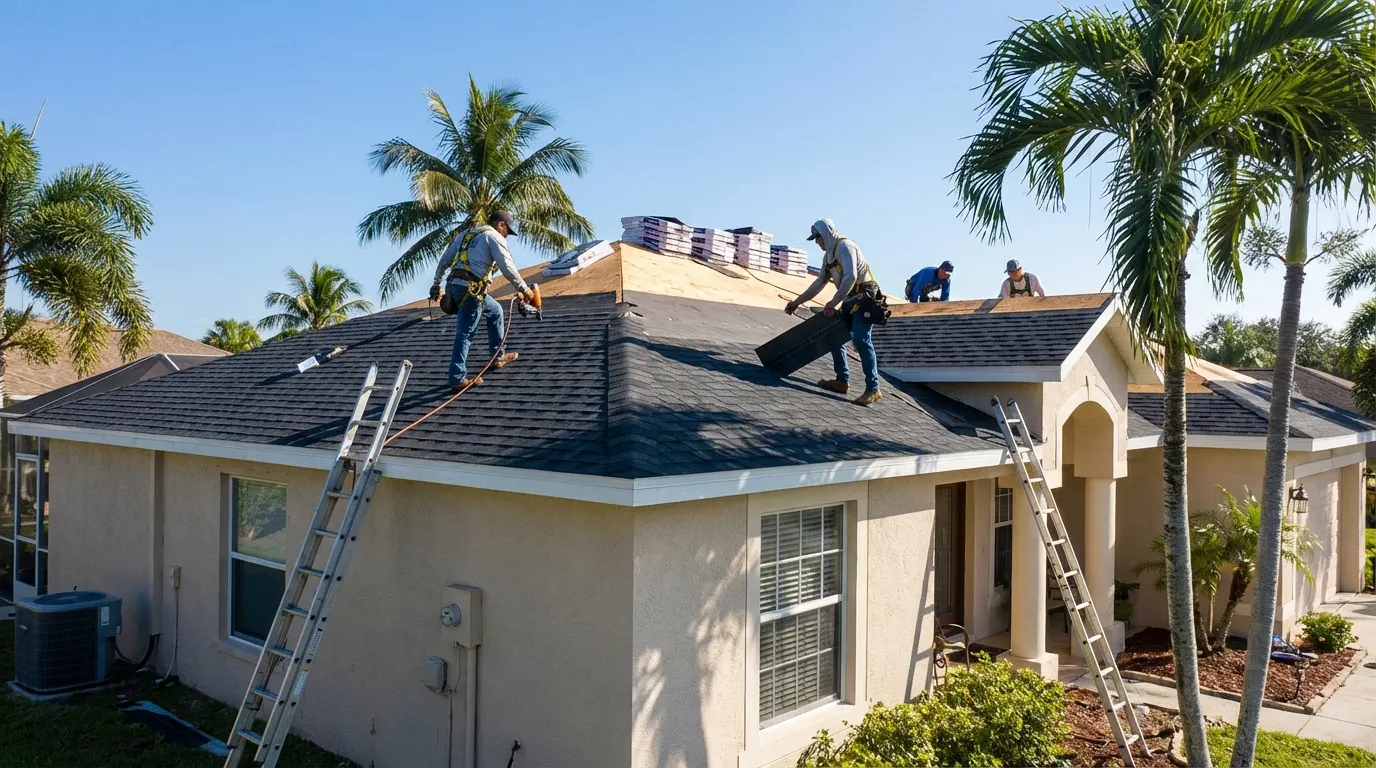
Tarping a roof is a job for a professional. A properly installed tarp needs to be secured so wind can't peel it back, and it should cover the damaged area without creating new problems. Climbing a wet, damaged roof is how a lot of people get hurt. A licensed roofer can secure the area, take notes and photos of what they see up top, and help you understand what comes next. You can learn more about our roofing services for storm damage repair and replacement.
Call Your Insurance Company
Contact your insurer as soon as you reasonably can to open a claim. Ask about your deductible, what your policy covers, any deadlines for filing, and whether they want an adjuster to see the damage before permanent repairs begin. Every policy is different, so get answers from your insurer directly rather than relying on what a neighbor's policy did.
It often helps to have your own roofing contractor inspect the roof before or around the time the adjuster visits. A professional inspection gives you an independent look at the damage. We offer free roof inspections, and you can reach out to schedule one.
Watch Out for Storm Chasers
After big storms, out of area crews sometimes knock on doors offering fast, cheap repairs. Some are legitimate, but many homeowners get burned by companies that disappear once the money is paid. Be cautious if someone:
- Shows up uninvited and pressures you to sign that day.
- Asks for large payments up front before any work starts.
- Offers to "cover your deductible" or makes promises about what insurance will pay.
- Can't show a Florida roofing or general contractor license.
- Has no local address or phone number you can verify.
Verify the License Before You Sign
In Florida, roofing work requires a licensed contractor. You can look up any license on the Florida Department of Business and Professional Regulation (DBPR) website. Ask for proof of insurance, too, and confirm the contractor will pull the required permit with your local building department. Coastal Home Creations & Roofing holds Roofing Contractor license CCC1335297 and General Contractor license CGC1506738, and we're always glad to share them. Learn more about our family and our work.
FAQ
Can I tarp my own roof after a storm?
We don't recommend it. Wet, damaged roofs are dangerous, and a poorly secured tarp can blow off or trap water. A licensed roofer can install temporary protection safely and document the damage at the same time.
Should I wait for the adjuster before calling a roofer?
You don't have to wait to get a professional opinion. Many homeowners schedule a roof inspection around the same time as the adjuster visit. Ask your insurer whether they want to see the damage before permanent repairs start.
How do I know a roofing contractor is legitimate?
Look up their license on the DBPR website, ask for a certificate of insurance, and confirm they will pull a permit in their own name. A local address and phone number you can verify is another good sign.
Written by the Coastal Home Creations team: third-generation builders licensed in Florida (GC CGC1506738, Roofing CCC1335297). General information only; for your specific home, call 386-785-3651.